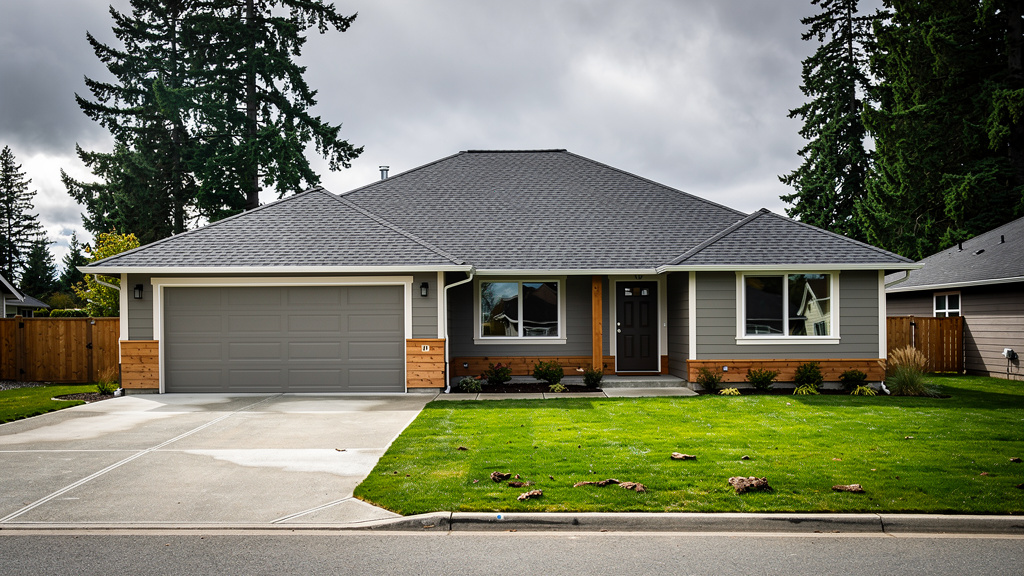
Most Seattle roof replacements take 5-7 days for completion, though weather delays and roof complexity can extend this timeline. The Pacific Northwest’s frequent rain requires roofers to work in sections and pause during heavy downpours, making timing more variable than in drier climates.
What Affects Your Roof Replacement Timeline in Seattle?
Several factors determine how long your roof replacement will take. Average-sized homes with straightforward rooflines typically complete within 3-7 days, but larger or more complex roofs can extend to 4-5+ days even in good weather.
Material choice significantly impacts timeline. Standard asphalt shingle installations move fastest, while metal roofs require 3-5 days due to specialized tools and precision installation requirements. Cedar roof replacement takes 4-6 days, with weather delays common in the Pacific Northwest climate.
Roof complexity matters more than size alone. Homes with multiple dormers, skylights, or steep pitches require additional safety measures and careful flashing work. What looks like a simple job from the ground often involves intricate detail work around chimneys, vents, and roof intersections that extends the timeline.
Your contractor’s crew size and experience level also influence speed. Established crews familiar with Seattle’s building requirements and weather patterns tend to work more efficiently than less experienced teams.
How Does Seattle Weather Impact Roof Replacement Timing?
Seattle’s climate creates unique challenges for roof replacement scheduling. The city receives significant rainfall throughout much of the year, making weather the primary variable in project timelines.
Roofers can work during Seattle’s typical light drizzle by tearing off one section at a time and immediately covering exposed areas with new underlayment. This section-by-section approach protects your home while allowing work to continue during mild precipitation.
Heavy downpours require complete work stoppage. Roofers must wait for conditions to improve before resuming, which can add days to your project timeline. Weather delays during rainy periods are common and should be factored into your planning.
Spring offers some of the best conditions for roof replacement, with mild temperatures and fewer intense rain events. Summer remains peak season due to extended daylight hours and minimal rainfall, though you may face longer wait times due to increased demand.
Winter roof replacements happen but require careful planning. Cold temperatures and frequent storms make the work more challenging and weather delays more likely.
When Is the Best Time to Schedule Roof Replacement in Seattle?
Timing your roof replacement strategically can minimize delays and potentially reduce costs. Spring through early fall offers the most predictable weather windows for completion.
Summer represents peak season with optimal working conditions – extended daylight hours, minimal rainfall, and warm temperatures that help materials install properly. However, high demand during these months can push wait times to 4-5 weeks for scheduling.
Spring provides an excellent balance of favorable weather and shorter wait times. Contractors have more availability as they emerge from the slower winter months, and weather conditions become more reliable for multi-day projects.
Fall can work well for roof replacement, but you’re racing against Seattle’s return to regular rainfall patterns. Early fall projects often complete successfully, while late fall scheduling risks weather delays that push completion into winter.
Winter replacement is possible but not ideal. Roofers experienced with Pacific Northwest conditions can work during dry spells, but expect longer timelines and potential weather-related delays that could extend your project significantly.
What Does the Day-by-Day Process Look Like?
Understanding the typical sequence helps set realistic expectations for your roof replacement timeline. Most projects follow a predictable pattern, weather permitting.
Day 1 typically involves setup, material delivery, and beginning the tear-off process. Crews remove old shingles down to the roof deck, as required by Seattle building code. They’ll inspect the underlying structure and identify any repairs needed before proceeding.
Days 2-3 focus on installing new underlayment, ice and water shield, and beginning shingle installation. Experienced crews can complete significant portions of average-sized roofs during these middle days, working systematically across the roof surface.
Days 4-5 involve finishing shingle installation, installing ridge vents, completing flashing work around penetrations, and handling detail work. This phase requires precision and can’t be rushed, especially around complex roof features.
Final day includes cleanup, final inspection, and walkthrough with the homeowner. Quality contractors perform thorough cleanup, removing all debris and conducting a detailed inspection to ensure proper installation.
Weather interruptions can insert pause days anywhere in this sequence. What appears to be a 5-day job might stretch to 7-8 days if rain forces work stoppages.
How Much Should You Budget for Timeline Variables?
| Project Factor | Typical Timeline | Potential Delays |
|---|---|---|
| Standard asphalt shingle | 3-5 days | +1-2 days for weather |
| Metal roof installation | 3-5 days | +1-3 days for precision work |
| Cedar shake replacement | 4-6 days | +2-4 days for weather delays |
| Complex rooflines | +1-2 days | Additional safety setup time |
| Structural repairs needed | +1-3 days | Depends on extent of damage |
| Peak season scheduling | Base timeline | +4-5 weeks wait time |
Weather remains the most unpredictable variable in Seattle roof replacement timelines. Even experienced contractors can’t control when heavy rain will pause work, making flexibility essential in your planning.
Budget extra time if your roof replacement reveals underlying issues. Damaged decking, inadequate ventilation, or structural problems discovered during tear-off can extend the timeline while ensuring your new roof performs properly.
What Are the Signs Your Timeline Might Be Extended?
Several factors during your roof replacement can signal a longer timeline than initially estimated. Recognizing these early helps manage expectations and planning.
Structural issues discovered during tear-off represent the most common cause of timeline extensions. Damaged roof decking, inadequate framing, or ventilation problems require correction before new roofing installation can proceed safely.
Weather forecast changes can quickly alter your timeline. Seattle’s weather patterns can shift rapidly, and contractors monitor forecasts closely to avoid exposing your home during storms. Be prepared for weather-related delays during traditionally rainy months.
Permit complications, while rare for basic re-roofing, can delay start dates. Complex projects or homes in historic districts may require additional approvals that extend pre-construction timelines.
Material delivery delays occasionally impact timelines, particularly during peak season when suppliers face high demand. Quality contractors typically order materials well in advance, but unexpected shortages can pause work.
Crew availability during busy seasons can extend both scheduling and completion timelines. Established contractors with reliable crews tend to maintain more predictable schedules than companies relying on subcontractors.
FAQ
How long do most Seattle roof replacements actually take? Most residential roof replacements complete within 5-7 days, though weather delays and roof complexity can extend this timeline significantly.
Can roofers work during Seattle’s typical light rain? Yes, experienced roofers can work during light drizzle by tearing off sections and immediately protecting exposed areas with underlayment.
What happens if heavy rain hits during my roof replacement? Heavy downpours require complete work stoppage. Contractors resume when weather improves, which can add 1-2 days to your timeline.
Do I need a permit for roof replacement in Seattle? Re-roofing permits are not required for one- and two-family homes, though permits cost $250-500 when needed for complex projects.
When should I avoid scheduling roof replacement in Seattle? Late fall through winter presents the highest risk of weather delays, though experienced contractors can work during dry winter spells.
How far in advance should I schedule roof replacement? During peak summer season, expect wait times of 4-5 weeks. Spring and fall typically offer shorter scheduling delays.
Sources
This answer was prepared using public roofing guidance, manufacturer information, cost benchmarks, and code references available at the time of publication.
- City of Seattle: Seattle Building Code 2018 Chapter 15 — re-roofing requirements and permit information
- Homze: How Much Does a Roof Replacement Cost in Seattle? 2025 Pricing Guide — timeline and weather impact data
- Orca Roofing & Exteriors: How Long Does It Take to Replace a Roof? — material-specific timeline information
- A Better Roofing Company: How Long Does a Roof Replacement Take? — general timeline expectations and seasonal factors
- Roofing and Maintenance: Best Time of Year to Replace Your Roof in Seattle — seasonal timing recommendations
- RoofSmart: Can You Really Replace Your Roof During Seattle’s Rainy Season? — weather-specific work protocols
Last updated: April 27, 2026
Are you a roofing company?
GroundRank created this content automatically to help businesses show up when customers search.