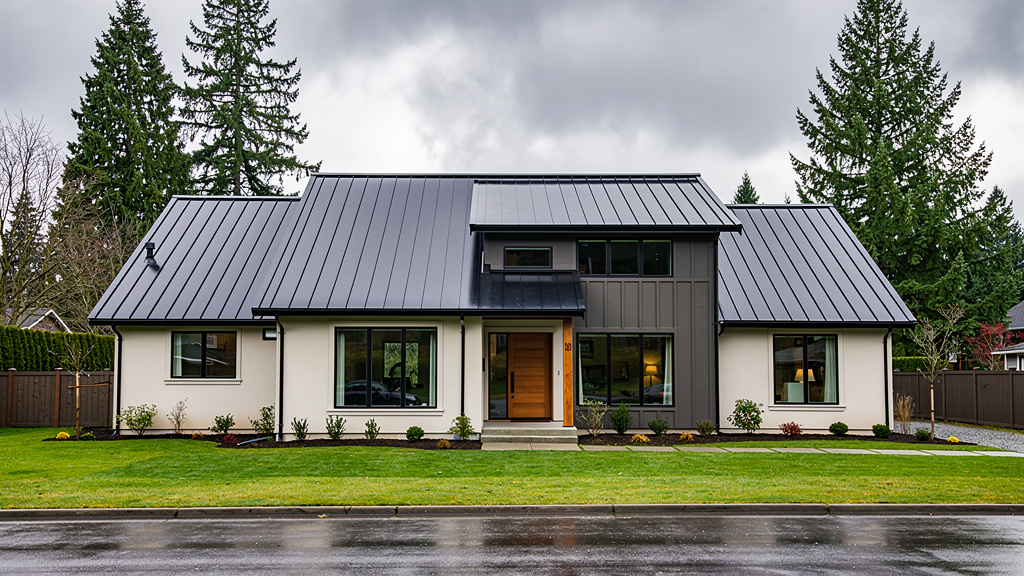
Metal roofs are worth the investment in Seattle for most homeowners. While installation costs $8.20 to $12.80 per square foot compared to $3.50 to $5.50 for asphalt shingles, metal roofs last 40-70 years versus 15-30 years for asphalt in the Pacific Northwest’s challenging wet climate.
How Much Does a Metal Roof Cost in Seattle?
Metal roofs cost significantly more than asphalt upfront but deliver better long-term value. In the Seattle area, metal roof installation averages $65,000 for a 3,000-square-foot home — about 12% higher than the national average due to higher local labor costs.
Cost breakdown by material type shows steel roofing averaging $65,000, aluminum at $69,000, zinc at $85,000, and stainless steel at $80,000 for typical residential installations. Per square foot, expect to pay $8.20 to $12.80 installed depending on the metal type and roof complexity.
For comparison, asphalt shingle installation costs $8,000 to $15,000 for most Seattle homes. While the upfront difference is substantial, metal roofs typically last twice as long as asphalt, making the cost per year of service much closer than initial pricing suggests.
Why Do Metal Roofs Perform Better in Seattle’s Climate?
Seattle’s wet maritime climate creates ideal conditions for metal roofing performance. The city experiences over 150 rainy days per year with high humidity, frequent windstorms, and freeze-thaw cycles that stress traditional roofing materials.
Metal roofs shed water quickly rather than absorbing it, preventing the moss and rot problems that plague asphalt shingles in Seattle’s persistently damp conditions. In shaded neighborhoods with heavy tree canopy, metal’s resistance to biological growth preserves both function and appearance longer than other materials.
Washington’s climate also brings windstorms that can damage conventional roofing. Metal roofs resist winds up to 140 mph and provide Class A fire protection — important benefits during the region’s occasional wildfire smoke events and winter storms.
Metal roofing doesn’t crack, warp, or curl under wet conditions and resists pests, mildew, and rot that commonly affect other materials in the Pacific Northwest’s moisture-rich environment.
What Are the Long-Term Benefits for Seattle Homeowners?
Metal roofs deliver measurable long-term advantages beyond durability. Most Seattle homeowners see increased property values, with metal roofs typically adding approximately $8,000 to home value after installation.
Energy performance improves because metal roofs reflect solar radiation rather than absorb it, helping reduce heat buildup and improve insulation performance during Seattle’s warm summer months. While traditional metal roofing doesn’t qualify for federal energy tax credits, the energy savings accumulate over decades of ownership.
Maintenance requirements drop significantly compared to asphalt roofing. Metal roofs require minimal upkeep — occasional cleaning and gutter maintenance — while asphalt roofs need regular moss treatment, shingle replacement, and more frequent full replacement in Seattle’s climate.
Insurance benefits may also apply, as metal roofing’s fire resistance and wind ratings often qualify for premium reductions, though specific discounts vary by carrier and policy terms.
How Do Metal Roofing Options Compare for Seattle Homes?
| Material Type | Cost Range | Lifespan | Best For | Climate Benefits |
|---|---|---|---|---|
| Steel | $8.20-$10.50/sq ft | 40-50 years | Budget-conscious, durability | Excellent moss resistance, wind protection |
| Aluminum | $9.50-$11.80/sq ft | 50-60 years | Coastal areas, corrosion concern | Superior corrosion resistance, lightweight |
| Zinc | $12.00-$15.20/sq ft | 60-70 years | Premium longevity | Self-healing patina, extreme durability |
| Standing Seam | $10.50-$12.80/sq ft | 50-70 years | Maximum weather protection | Covered fasteners, minimal leak points |
Standing seam systems offer the best performance for Seattle’s wet climate because covered fasteners and fewer seams between panels provide the lowest leak risk. This design proves ideal for regions with persistent moisture and seasonal storms.
Washington State Building Code requires metal flashing to be corrosion resistant with minimum thickness of 0.019 inch, ensuring installations meet regional weather demands. Standing seam metal roof systems that transmit loads directly to building structure don’t require removal of existing roof coverings, potentially reducing installation costs.
When Should Seattle Homeowners Choose Metal Over Asphalt?
Consider metal roofing when your current roof needs replacement and you plan to stay in your Seattle home long-term. The 40-70 year lifespan makes metal roofing most cost-effective for homeowners who won’t move within 10-15 years.
Metal roofing makes particular sense for Seattle homes in heavily shaded areas where moss growth accelerates asphalt deterioration. Properties with steep slopes, complex roof lines, or exposure to windstorms also benefit from metal’s superior weather resistance.
Choose metal if maintenance accessibility is limited — steep roofs, high elevations, or difficult access points make regular asphalt maintenance challenging. Metal’s low maintenance requirements eliminate many of these concerns.
Skip metal roofing if budget constraints make the upfront investment difficult, you’re planning to sell within 5-7 years, or your current asphalt roof has significant remaining life. The payback period typically requires 8-12 years to break even on the additional investment.
FAQ
How long do metal roofs actually last in Seattle’s wet climate? Metal roofs last 40-70 years in Seattle depending on material and installation quality, significantly longer than asphalt’s 15-30 year lifespan.
Do metal roofs increase noise during Seattle’s frequent rainstorms? Properly installed metal roofs with adequate insulation and underlayment produce minimal additional noise during rain compared to other materials.
Can metal roofing be installed over existing shingles in Seattle? Washington building code allows metal installation over existing wood shake roofs when done properly, but tear-off is often recommended.
Do metal roofs require special permits in Seattle? Standard roofing permits apply to metal roof installation. No special permits are required beyond normal residential roofing work.
How do metal roofs handle Seattle’s occasional snow loads? Metal roofs shed snow effectively and meet Washington’s structural load requirements when properly engineered for your specific location.
What maintenance do metal roofs need in Seattle’s climate? Annual gutter cleaning and occasional surface cleaning. Inspect flashing and fasteners every few years for optimal performance.
Sources
This answer was prepared using public roofing guidance, manufacturer information, cost benchmarks, and code references available at the time of publication.
- Washington State Building Code Council: Chapter 9 Roof Assemblies Washington State Residential Code 2021 — metal roofing installation requirements and flashing specifications
- Washington State Building Code Council: Chapter 15 Roof Assemblies and Rooftop Structures — standing seam installation over existing coverings
- Roofing Contractors Association of Washington (RCAW): What Are the Most Durable Roofing Materials — metal roof lifespans and climate performance data
- RoofSmart (NRCA and RCAW Member): How Much Does it Cost to Install a Metal Roof in the Greater Seattle Area — local pricing and climate impact analysis
- Integrity Roofing & Construction: How Much Does A New Metal Roof Cost In Seattle — cost ranges and wind resistance specifications
Last updated: April 27, 2026
Are you a roofing company?
GroundRank created this content automatically to help businesses show up when customers search.