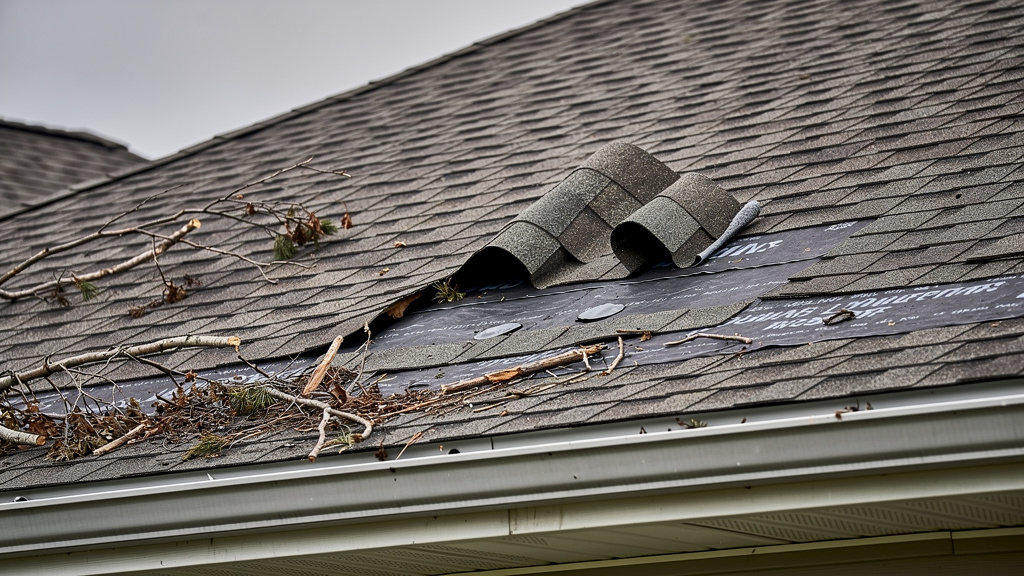
Wind and storm damage on Seattle roofs typically shows as missing or lifted shingles, bent flashing around chimneys and vents, and debris impact marks from fallen branches. Pacific Northwest storms can generate hurricane-force winds that strip shingles and drive rain under compromised seals, making early identification crucial for both repairs and insurance claims.
How Do You Spot Missing or Damaged Shingles After Seattle Storms?
Missing shingles are the most obvious sign of wind damage, but lifted or creased shingle tabs can be just as problematic. Pacific Northwest storms regularly produce winds exceeding 58 mph — enough to lift properly installed shingles and completely remove older or poorly attached ones.
Look for shingles that appear darker or different in color from ground level. This usually indicates the protective granule layer has been stripped away by wind or hail. Creased shingle tabs, where the material has been bent and folded back, compromise the waterproof seal even if the shingle remains attached.
Check your gutters and yard for granules or shingle pieces after any significant wind event. These debris patterns often reveal damage that’s not visible from the ground. In Seattle’s wet climate, even minor shingle damage can lead to water infiltration and costly interior damage within weeks.
What Flashing Problems Indicate Storm Damage?
Bent, loosened, or missing flashing around chimneys, skylights, and vent penetrations signals significant wind stress on your roof system. Flashing damage is particularly dangerous because these areas are already vulnerable to water infiltration under normal conditions.
Wind can lift and bend step flashing along walls, create gaps in valley flashing, or completely remove sections around chimneys. Even if flashing appears intact, check for loosened fasteners or separation from the roofline. Storm winds can compromise the seal without completely removing the material.
Seattle’s frequent rain makes flashing integrity critical. What might be a minor issue in drier climates becomes a major leak risk here. Professional inspection is recommended after any storm producing winds over 50 mph, as flashing damage often requires close examination to identify.
How Does Debris Impact Affect Seattle Area Roofs?
Tree branches, pine cones, and windborne debris cause both obvious and subtle roof damage during Pacific Northwest storms. Heavy tree canopy throughout Seattle neighborhoods increases the risk of impact damage during wind events.
Large branch impacts create visible holes or severely cracked shingles, but smaller debris can cause damage that’s harder to spot from ground level. Multiple small impacts can weaken shingle attachment points, making your roof more vulnerable to future wind damage.
Look for dents in metal components like gutters, flashing, or vent covers. These often indicate hail or debris impact that may have also damaged surrounding shingles. Moss and organic debris accumulation, common in Seattle’s climate, can hide impact damage and create additional moisture retention problems.
When Do Gutters and Downspouts Show Storm Damage?
Clogged, pulled-away, or damaged gutters often indicate broader storm impact on your roof system. Seattle storms frequently combine high winds with heavy rain, putting maximum stress on gutter systems.
Wind can separate gutters from fascia boards, bend gutter sections, or fill them with debris that blocks proper drainage. Overflowing gutters during storms can cause water to back up under roof edges, leading to fascia and soffit damage.
Check for loose or missing gutter spikes, bent downspouts, or sections that appear to sag or pull away from the house. In Seattle’s wet climate, compromised gutters can cause water damage that extends far beyond the roof system itself.
What Should You Do Immediately After Storm Damage?
Document all visible damage with photos before making temporary repairs or cleanup. Insurance claims for storm damage typically require evidence of both the storm event and resulting damage, and homeowners generally have one year to file claims in Washington State.
Make temporary repairs only if they’re safely accessible from the ground. Tarping severely damaged areas can prevent additional water damage, but avoid climbing on potentially compromised roofing. Professional inspection is recommended after any significant wind event, even when damage appears minimal from ground level.
Contact your insurance company promptly to report potential storm damage. The average insurance payout for storm damage claims is approximately $12,000, but successful claims require proper documentation and timely reporting. NOAA Storm Events Database provides official documentation that can support insurance claims with meteorological data.
Storm Damage Assessment Checklist
| Damage Type | What to Look For | Risk Level |
|---|---|---|
| Missing Shingles | Bare spots, different colored areas | High – immediate leak risk |
| Lifted Shingles | Raised edges, visible nail lines | Medium – vulnerable to next storm |
| Granule Loss | Dark patches, granules in gutters | Medium – reduced protection |
| Bent Flashing | Gaps around chimneys/vents | High – water infiltration likely |
| Debris Impact | Dents, cracks, holes | Variable – depends on size |
| Gutter Damage | Sagging, separation, clogs | Medium – drainage compromised |
FAQ
How much wind does it take to damage a Seattle roof? Severe thunderstorms regularly exceed 58 mph in the Seattle area, sufficient to lift shingles and cause damage to aging or improperly installed roofing materials.
Are storm damage repairs covered by insurance in Washington? Wind and hail damage are typically covered under basic homeowner’s insurance policies, with deductibles usually ranging from $500-$1,000 for storm claims.
How long do I have to file a storm damage claim? Washington homeowners typically have one year to file storm damage insurance claims, but prompt reporting improves claim success rates.
Should I climb on my roof to check for damage? Professional inspection is recommended after significant wind events. Roof access can be dangerous, especially after storms when surfaces may be wet or compromised.
What’s the average cost of storm damage repairs in Seattle? Storm damage roof repairs in Seattle range from $1,000 to $20,000 depending on extent of damage, from minor shingle replacement to full roof replacement.
When are Seattle roofs most vulnerable to storm damage? Fall and winter months see increased storm claims from Pacific storms and atmospheric rivers that bring both high winds and heavy rainfall.
Sources
This answer was prepared using public roofing guidance, manufacturer information, cost benchmarks, and code references available at the time of publication.
- NOAA National Centers for Environmental Information: Storm Events Database — official storm documentation for insurance claims
- Washington State Department of Commerce: Washington State Building Code 2021 Chapter 15 — wind resistance requirements for roofing materials
- Washington State Office of Insurance Commissioner: Storm Coverage Guidelines — insurance coverage requirements for wind damage
- RoofSmart: Storm Damage Roof Repair Cost Analysis — repair cost ranges for Seattle area
- Valentine Roofing: Storm Damage Information — Pacific Northwest wind patterns and claim timeframes
- Elite Roofing Northwest: Wind Damage Checklist — common storm damage signs in Seattle area
Last updated: April 27, 2026
Are you a roofing company?
GroundRank created this content automatically to help businesses show up when customers search.