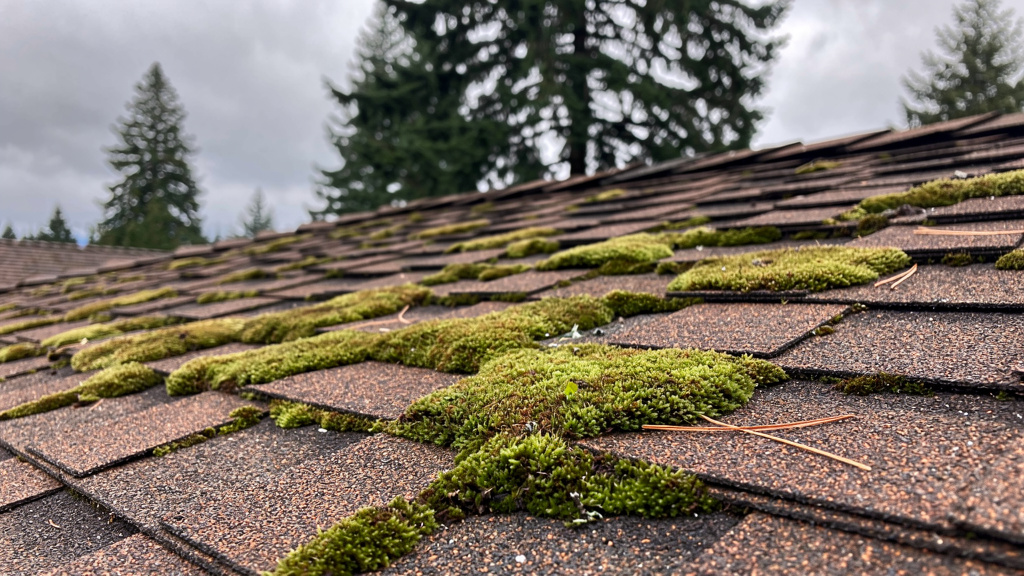
Seattle’s frequent rain and high humidity create ideal conditions for roof moss growth. Homeowners can prevent moss damage through regular tree trimming for sunlight exposure, installing zinc strips along roof ridges, and scheduling annual professional cleanings that typically cost $300-$900.
Why Is Moss Prevention Critical for Seattle Area Roofs?
The Pacific Northwest creates perfect moss-growing conditions that most other regions don’t face. Seattle experiences over 150 days of rain annually, combined with high humidity and limited direct sunlight from heavy tree canopy coverage. Unlike drier climates where roofs get regular drying periods, Seattle-area roofs can stay damp for weeks at a time.
Moss isn’t just unsightly — it actively damages roofing materials. The organisms trap moisture against shingles, causing granule loss and premature aging of asphalt materials. When water freezes and thaws in moss-filled areas, shingles crack and pull apart. Over time, this leads to wood rot, mold growth, insulation damage, and interior ceiling stains. Moss-related roof issues can increase repair costs by up to 30% compared to standard wear.
Washington State Building Code requires protection against moss growth and moisture infiltration, recognizing that our climate demands proactive prevention rather than reactive repairs.
What Physical Prevention Methods Work Best in Seattle’s Climate?
Tree trimming delivers the most effective long-term moss prevention. Overhanging branches block sunlight that would naturally dry roof surfaces and limit moss growth. Focus on branches within 10 feet of the roof line, particularly on north-facing sections that receive less direct sun exposure.
Professional moss removal costs $280-$368 on average in Seattle, with the full range spanning $236-$412. This involves physically scraping moss from shingle surfaces and clearing debris from gutters and valleys. The process requires proper safety equipment since Washington State mandates fall protection for any roofing work at 4 feet or higher elevation.
Soft washing treatments use low-pressure water and biodegradable solutions to kill moss without damaging shingles. Costs run $0.30-$0.75 per square foot, while chemical treatments range $0.20-$0.30 per square foot. Potassium salts of fatty acids provide an environmentally safe option that breaks down naturally after treatment.
Regular gutter cleaning prevents water backup that creates consistently damp conditions where moss thrives. Clean gutters twice yearly — after spring pollen season and before winter rains begin.
How Effective Are Zinc Strips for Seattle Roofs?
Zinc strips offer proven long-term prevention specifically suited to high-rainfall areas like Seattle. The EPA classifies zinc metal strips as minimum risk pesticides, making them safe for residential use. When rainwater flows over zinc, it dissolves trace amounts of zinc particles that prevent moss formation on surfaces up to 15 feet below the installation point.
Installation involves securing 2-4 inch zinc strips along roof ridges, with effectiveness lasting approximately one year before replacement is needed. The strips work particularly well on asphalt shingle roofs where moss typically starts at ridge areas and spreads downward.
Zinc strips cost significantly less than repeated professional cleanings over a roof’s lifespan. While exact Seattle-area installation costs vary by contractor, the materials themselves represent a minimal investment compared to moss damage repair costs.
For maximum effectiveness in our climate, combine zinc strips with other prevention methods rather than relying on them alone. The strips work best when roofs get adequate sunlight exposure and proper drainage.
When Should Seattle Homeowners Call Roofing Professionals?
Safety requirements make professional service necessary for most moss prevention work. Washington State requires fall protection equipment and proper training for roofing work, overseen by the Department of Labor & Industries. Steep roof pitches, wet conditions, and height restrictions put homeowners at serious risk.
Call professionals immediately if you notice interior ceiling stains, which indicate moss has already caused moisture infiltration and potential structural damage. Similarly, missing or loose shingles in moss-covered areas require immediate attention to prevent further water damage.
Annual professional roof inspections catch moss problems before they cause expensive damage. Licensed contractors can identify early moss growth, assess drainage issues, and recommend specific prevention strategies for your roof’s orientation and surrounding vegetation.
Professional cleaning becomes cost-effective when moss covers more than 30% of visible roof surfaces. At this point, the time and safety equipment needed for DIY removal often exceeds the cost of hiring experienced contractors who can complete the work safely and thoroughly.
What’s the Cost Difference Between Prevention and Repair?
| Prevention Method | Cost Range | Frequency | Coverage |
|---|---|---|---|
| Professional cleaning | $300-$900 | Every 1-2 years | Full roof |
| Zinc strip installation | $200-$500 | Replace annually | 15 feet below strips |
| Tree trimming | $300-$800 | Every 2-3 years | Property-wide |
| DIY zinc sulfate treatment | $30-$60 | Twice yearly | 600-1,000 sq ft per treatment |
Repair costs escalate quickly once moss causes structural damage. Replacing moss-damaged shingles runs $500-$2,000 for section repairs, while full roof replacement averages $8,000-$15,000. Interior damage from moisture infiltration adds thousands more in drywall, insulation, and mold remediation costs.
The University of Washington research confirms that zinc strips remain effective for treating up to 1,000 square feet when applied at proper concentrations — 3 pounds of zinc sulfate per 9 gallons of water. This DIY option works best for maintenance between professional services.
FAQ
How often should Seattle roofs be cleaned for moss prevention? Every 1-2 years depending on tree coverage and roof orientation. North-facing sections may need annual attention.
Do zinc strips work in heavy rain conditions? Yes, zinc strips are specifically effective in high-rainfall areas like Seattle where frequent water flow dissolves protective zinc particles.
Can I remove moss myself safely? Only on single-story roofs with proper safety equipment. Washington State requires fall protection for work above 4 feet.
What time of year is best for moss treatment? Late spring through early fall when weather allows roof access and treatments have time to work before heavy rains.
How do I know if moss has caused structural damage? Look for interior ceiling stains, loose or missing shingles, or visible wood rot around affected areas.
Are chemical moss treatments safe for gutters and landscaping? EPA-approved treatments like potassium salts of fatty acids break down naturally and won’t harm plants or water systems.
Sources
This answer was prepared using public roofing guidance, manufacturer information, cost benchmarks, and code references available at the time of publication.
- Washington State Government: Chapter 9 Roof Assemblies Washington State Residential Code 2021 — building code requirements for moisture protection
- University of Washington: on roof moss removal Elisabeth C. Miller Library — zinc strip effectiveness and EPA pesticide classifications
- Oregon State University Extension Service: How to control roof moss and prevent long-term damage — treatment ratios and safety requirements
- HomeYou: Roof Moss Removal in Seattle WA Costs 03/2026 — local cost data and project statistics
- Roofing Contractors Association of Washington: Understanding Washington State Roofing Safety Code — fall protection requirements and licensing oversight
- Elite Roofing: Why Moss Is More Than a Cosmetic Problem for Pacific Northwest Roofs — climate conditions and damage mechanisms
Last updated: April 27, 2026
Are you a roofing company?
GroundRank created this content automatically to help businesses show up when customers search.